
The White Paper focuses on core topics including consumer trends, scenario expansion, industry integration, and ecosystem co-creation, tracing the evolution of Chinese fragrance consumption from “buying scent” to “using scent,” and the industry’s boundary expansion from “perfume and fragrance” to “olfactory ecosystem.” It reveals the application potential of fragrance across diverse scenarios, offering an important basis for industry insights, brand innovation, industry-academia-research collaboration, and olfactory ecosystem development.
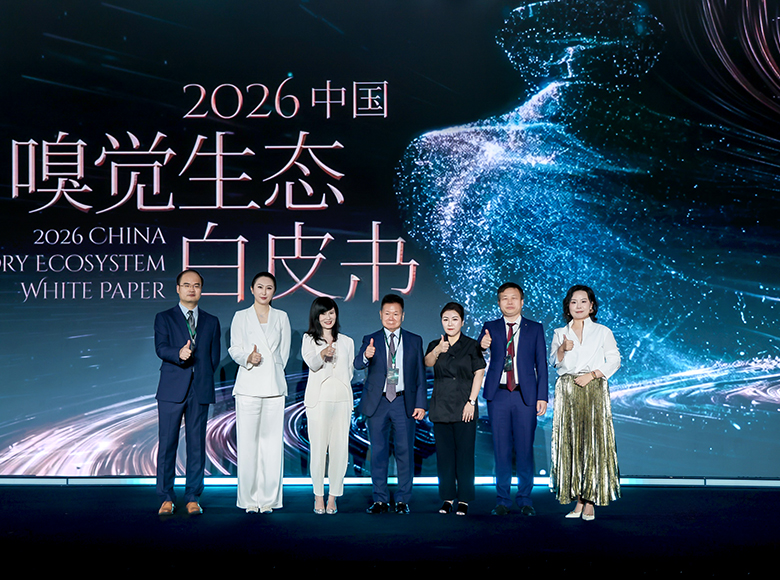
The launch was witnessed by Steven Lau, Founder & Chairman of Eternal Group; Chole Lam, CEO of Eternal Group; Wendy Lau, Executive Director of Eternal Group; Viola Wang, COO of Eternal Group; Justin Li, Senior Research Director of Innovation & Customer Experience Domain, Kantar; Niu Yunwei, Professor, PhD Supervisor, Director of the Engineering Research Center of Fragrance, Flavor and Cosmetics, Ministry of Education, Shanghai Institute of Technology; and Rachel Gu, Marketing Director of Eternal Group.
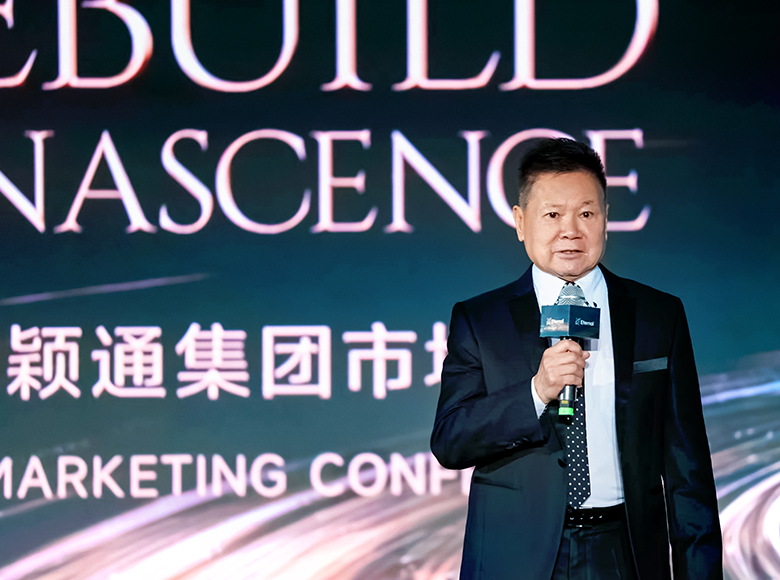
Steven Lau, Founder & Chairman of Eternal Group, said: “Eternal Group will build a global leading fragrance ecosystem platform with the vision of ‘Global Vision, Chinese Definition.’ We will adhere to long-term principles and create shared success through ‘Value Co-creation, Win-Win Partnership’ with our consumers, brand partners, distribution partners, employees and investors.”
Reconstructing Consumer Trends: From “Buying Scent” to “Using Scent,” Consumer Value Enters a Stage of Deep Cultivation
The White Paper observes that China’s fragrance market is shifting from scale expansion to value operation. Growth logic is moving beyond category expansion toward deeply satisfying segmented needs and specific usage scenarios. Chole Lam, CEO of Eternal Group, stated: “Changes in China’s perfume and fragrance industry never occur in isolation; we must place perfume within a broader consumer landscape. From selling products to managing value, from capturing attention to building long-term relationships—competition in the olfactory ecosystem is essentially a shift from ‘smelling scent’ to building long-term sensory relationships.” This reveals that deep cultivation of consumer value lies not only in discovering new needs, but also in enabling scent to continuously enter consumers’ daily lives and settle into long-term relationships.
As market structure differentiates, the value of fragrance products is shifting from “a single scent” to “scenario-based solutions.” The White Paper shows that consumer demand for scent is shifting from basic functions such as decoration or odor elimination, gradually extending to emotional regulation, home atmosphere creation, self-expression, and lifestyle shaping.
Justin Li, Senior Research Director of Innovation & Customer Experience Domain, Kantar, noted based on consumer research: “Consumption judgment is shifting from ‘expensive or not’ to ‘worth it or not.’ Consumers are not buying fragrance; they are managing themselves. Therefore, the value of fragrance products no longer stops at being owned, but lies in whether they can help people manage their life states. Thanks to its easy perception and repeated activation, scent is gradually becoming a kind of infrastructure.”
From a global market perspective, this consumer shift is not an isolated phenomenon. Patrizio Stella, Group CEO of Give Back Beauty, commented: “Global fragrance growth is increasingly driven by consumer base expansion, scenario diversification, premiumization, and emotional value. Asia, especially China, has always been one of our highest-priority global markets. As consumers move from adhering to a single signature scent toward contextually adaptive fragrance routines and identity-aligned olfactory expression, the Chinese and broader Asian markets are evolving into pivotal hubs for both global fragrance growth and cross-market innovation.”
Changes on the consumer side can be summarized into three clear paths: scent entering more life scenarios, different cohorts forming differentiated value orientations, and consumption meaning shifting from product possession to continuous self-management. As consumers seek scent value in richer life scenarios, the boundaries of the fragrance industry are gradually being broadened.
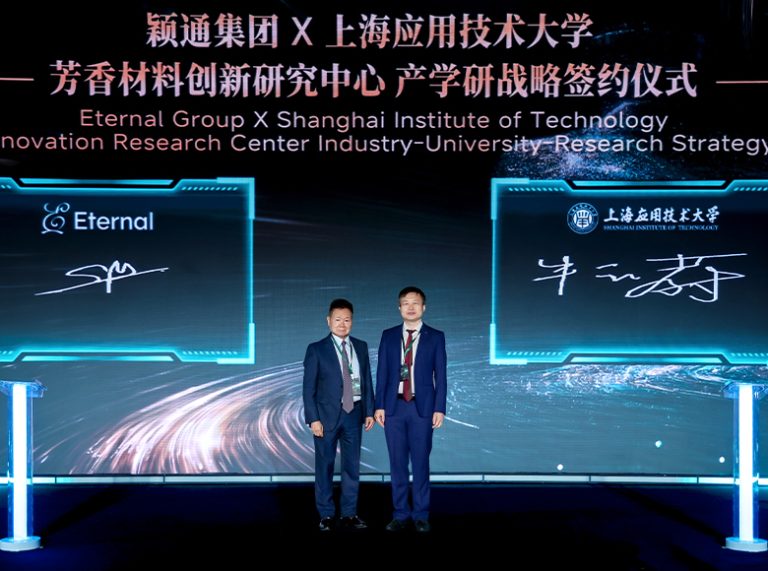
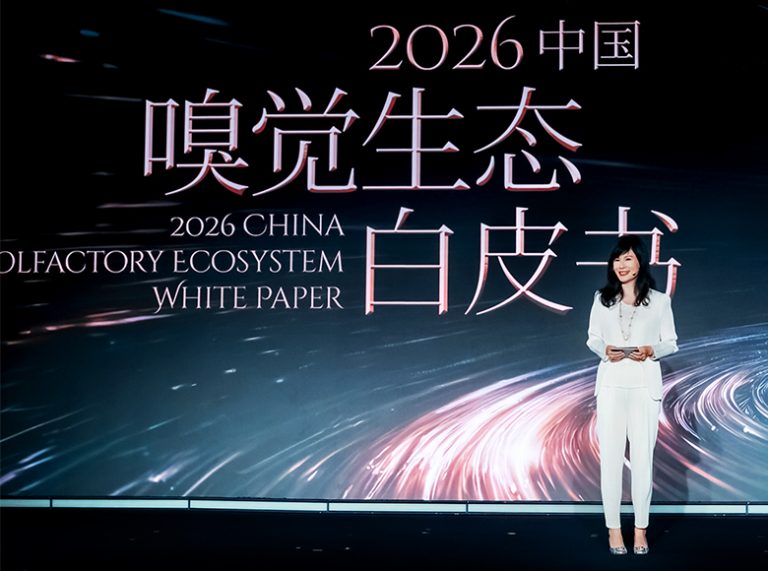


Changes in consumer demand are transmitting to the industry side. According to the White Paper, future growth space for the fragrance industry comes not only from new categories and products, but also from new connections continuously formed between scent and different industries and scenarios. From scientific research and technology to daily home life, from commercial spaces to culture and art, olfaction is gradually entering more application fields. The future of olfactory ecosystem lies in establishing a long-term development framework centered on “elevation, iteration, integration, and co-creation”. The key to cross-sector integration is understanding the genuine emotional needs of each sector, using scent to fill the gaps – and in doing so, unlocking the next cycle of exponential growth.
As scent gradually breaks through the boundaries of traditional perfume and fragrance categories, a more open and diverse “olfactory ecosystem” is taking shape. Around the theme “Where Does the Olfactory Ecosystem End?”, moderated by A Hua, Fragrance KOL & Former Senior Media Professional, a panel discussion was held with Chole Lam, CEO of Eternal Group; Pierpaolo Manes, CEO of CULTI; Niu Yunwei, Professor, PhD Supervisor, Director of the Engineering Research Center of Fragrance, Flavor and Cosmetics, Ministry of Education, Shanghai Institute of Technology; Chen Yaping, General Manager of Key Accounts & Automotive Marketing, Weibo East China; and Wu Yue, Founder of Notes Shanghai. They discussed consumer trends, brand growth, and the industry’s future.
The panel discussion began with industry opportunities brought by changes in consumer demand. Pierpaolo Manes, drawing on experience in the European market, pointed out: “China’s home fragrance market has vast growth potential. Consumers are at a critical stage of consumption upgrading and category exploration. Home fragrance is not a simple extension of personal perfume, but an emotional environment that accompanies daily life over the long term, using space as its medium.” Chole Lam further stated from the perspective of Chinese consumer needs: “From personal perfume to home fragrance, lifestyle aesthetics, and emotional health, the broadening of category boundaries essentially stems from consumers’ higher expectations for living environment, scenario experience, and a sense of certainty.”
As demand expands to more scenarios, brand competition is also shifting from towards long-term operation. Wu Yue believes: “Brands need long-term accumulation. Beyond product strength, a clear and stable brand core value, sustained operational capability, and patience and resilience determine whether a brand can convert temporary heat into long-term repurchase and real user relationships.” Chen Yaping pointed out: “What matters more in communication is giving consumers the impulse to say ‘I want to smell this.’”The value of communication is not just creating exposure, but helping consumers establish emotional connections with scent, opening an entrance for long-term relationships.
Technological innovation is opening more functional boundaries for the olfactory ecosystem. Niu Yunwei stated: “Functional fragrance will be one of the key trends of the future. As scientific research moves beyond sensory experiences to delve deeper into the cellular and neural levels, scents will no longer be limited to pleasant experiences, but will extend into health management, material innovation, and diverse end-user scenarios.” The five guests collectively outlined the growth logic of the olfactory ecosystem from five dimensions—spatial experience, consumer demand, brand management, content communication, and scientific R&D: starting from genuine needs, supported by long-term relationships, and continuously broadening industry boundaries through cross-sector integration.
At the conference, Eternal Group also set up an interactive scent installation titled “String Movement · Scent Emergence,” integrating string sound with olfactory experience. It presented the application possibilities of scent in multisensory scenarios through immersive interaction.
Strategic Vision: Seven Years of Deep Cultivation, from Industry Observer to Global Fragrance Ecosystem Co-Creator
Since publishing its first white paper in 2020, Eternal Group has systematically documented the evolution of China’s fragrance market for seven consecutive years. From initially focusing on category scale and consumer trends to this year’s upgrade to an “olfactory ecosystem” perspective, the research scope has extended from bottled perfume to olfactory economy, lifestyle aesthetics, and health management. These seven years have also been a journey for Eternal Group, from brand management to lifestyle aesthetics ecosystem builder.
Chole Lam, CEO of Eternal Group, stated: “Eternal Group’s mission has never been solely about research, but rather about uncovering the needs of Chinese consumers, and inspiring and fulfilling their pursuit and enjoyment of an exquisite and beautiful life. The White Paper is a tool, the ecosystem is the pathway – but the resonance of the industry and the better life of consumers are the direction we hope to work toward together with all our industry peers.”
In the future, Eternal Group will leverage its seven years of industry research accumulation to link brands, research, commercial, and cultural resources, driving the sustained development of China’s olfactory ecosystem through scenario innovation, industry-academia-research collaboration, and artistic co-creation.